
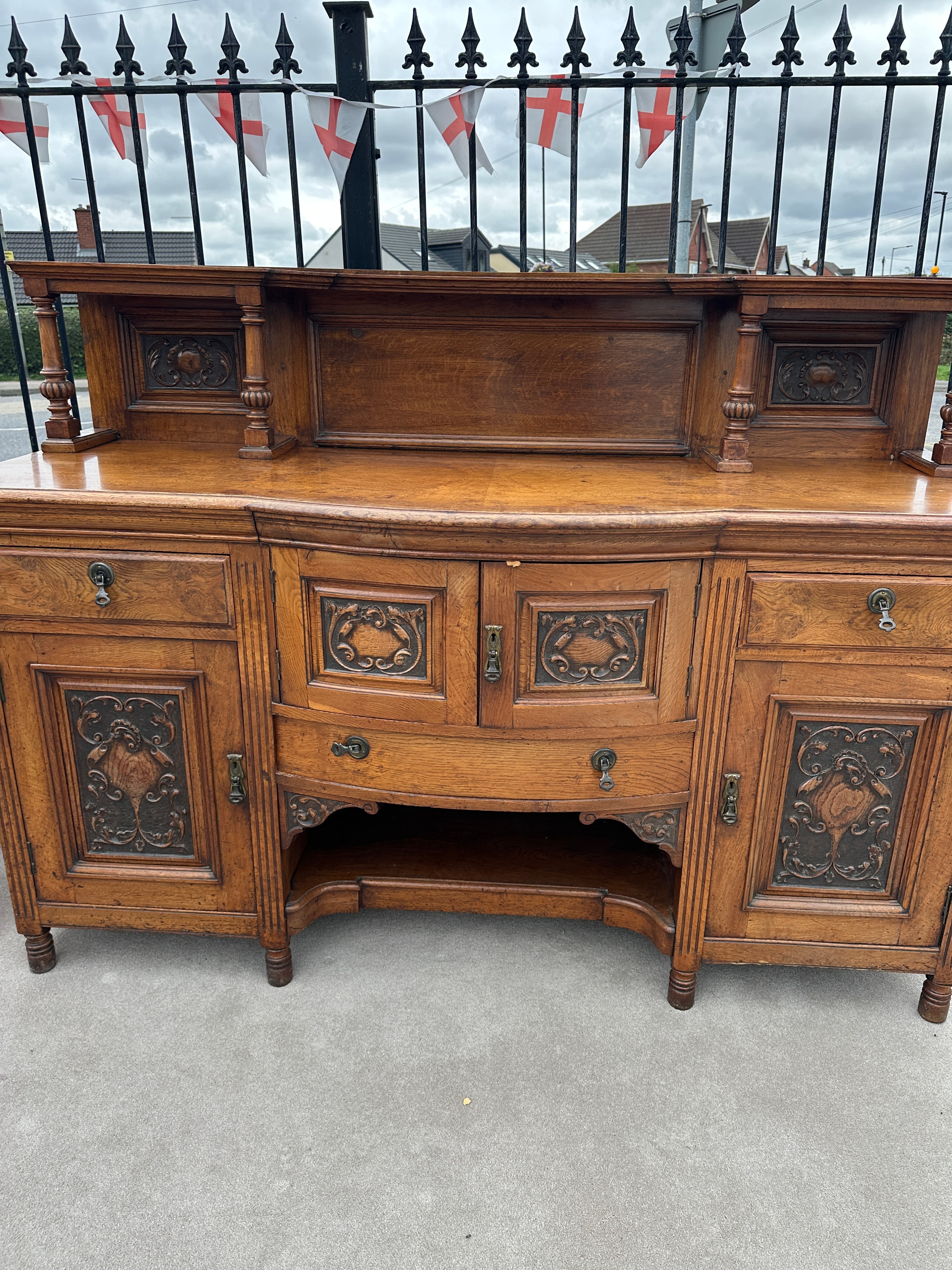
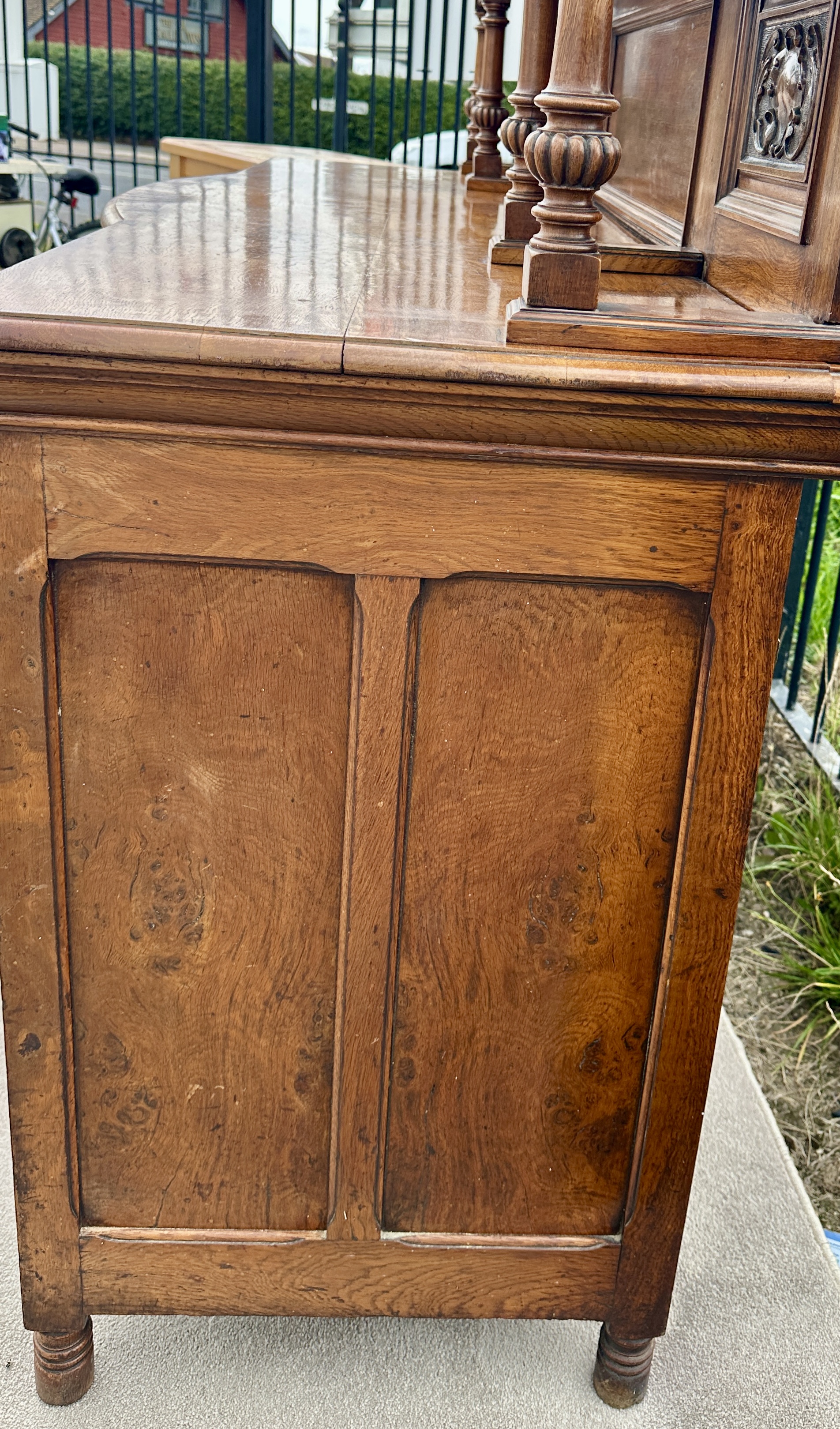
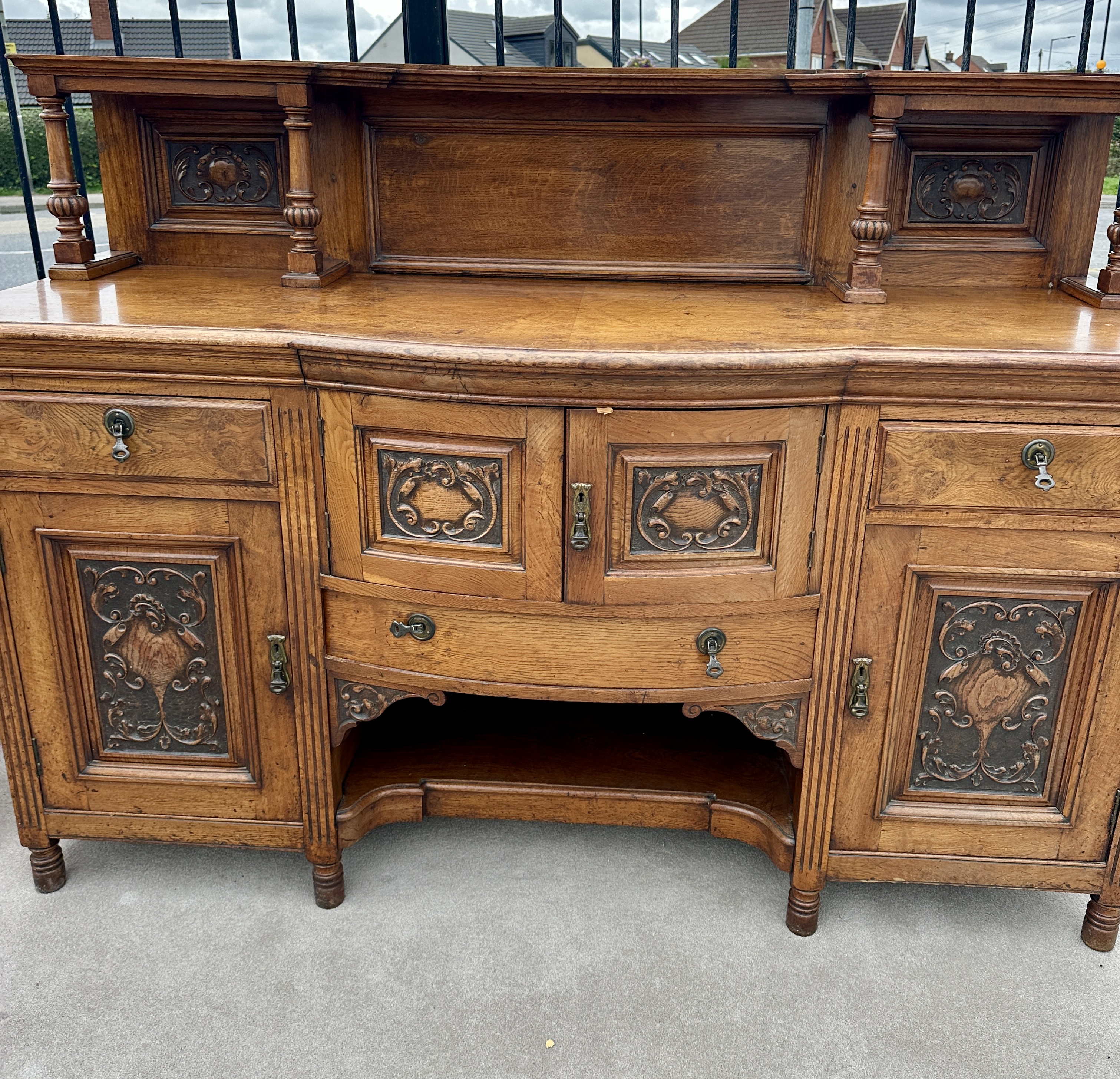
Lot 61: A Late Victorian Breakfront Oak Sideboard With Relief Carving
Not sold
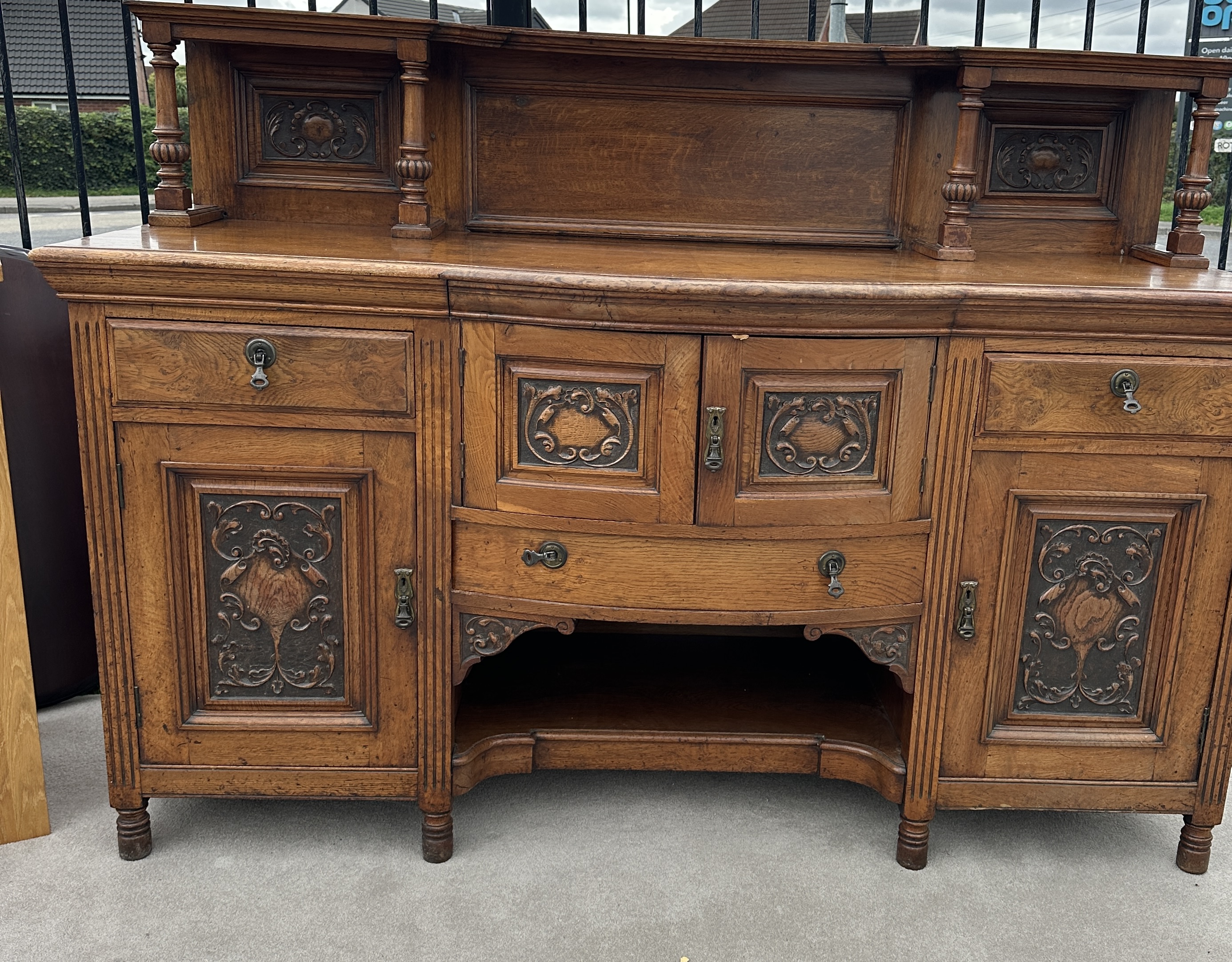
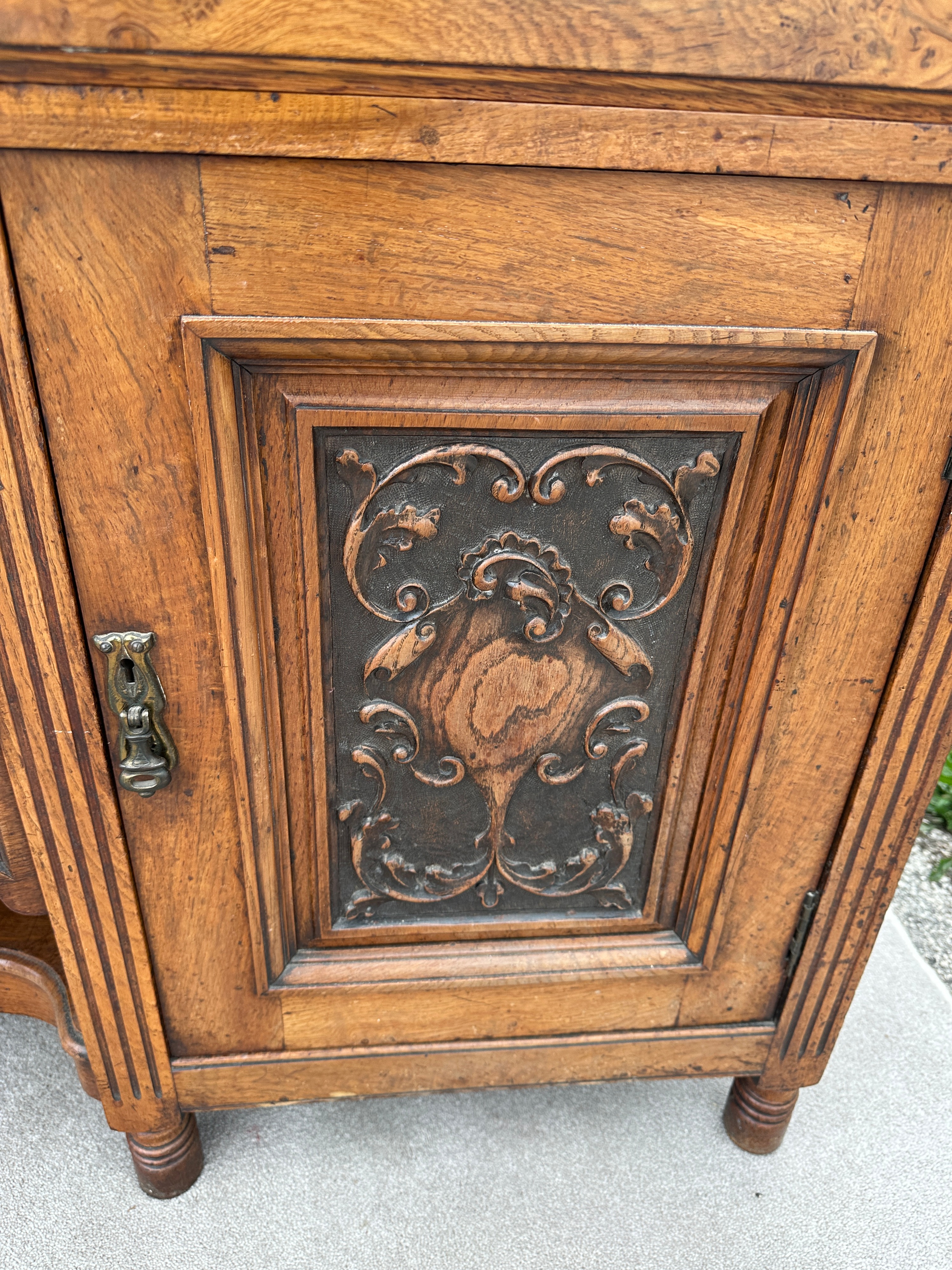
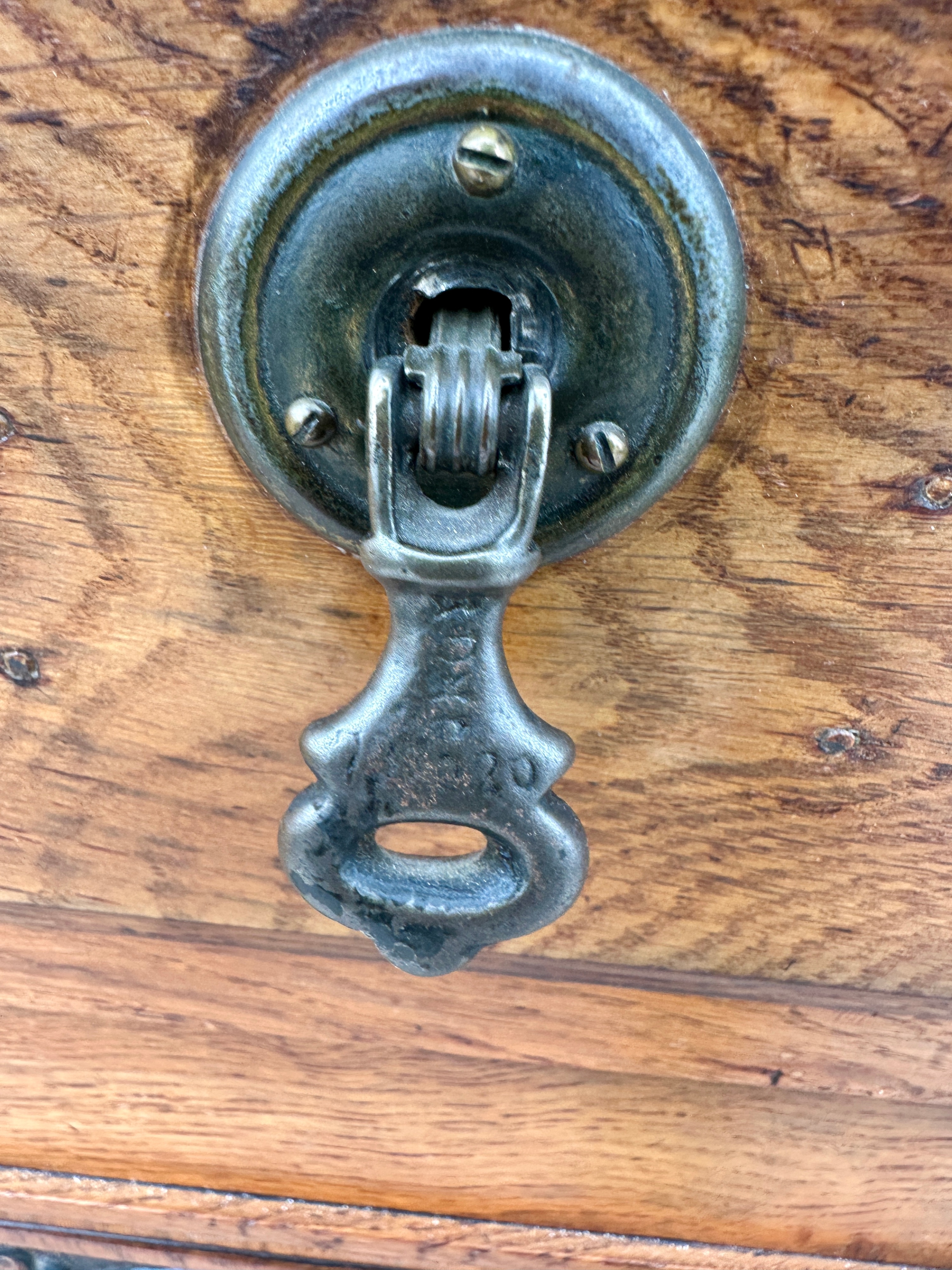
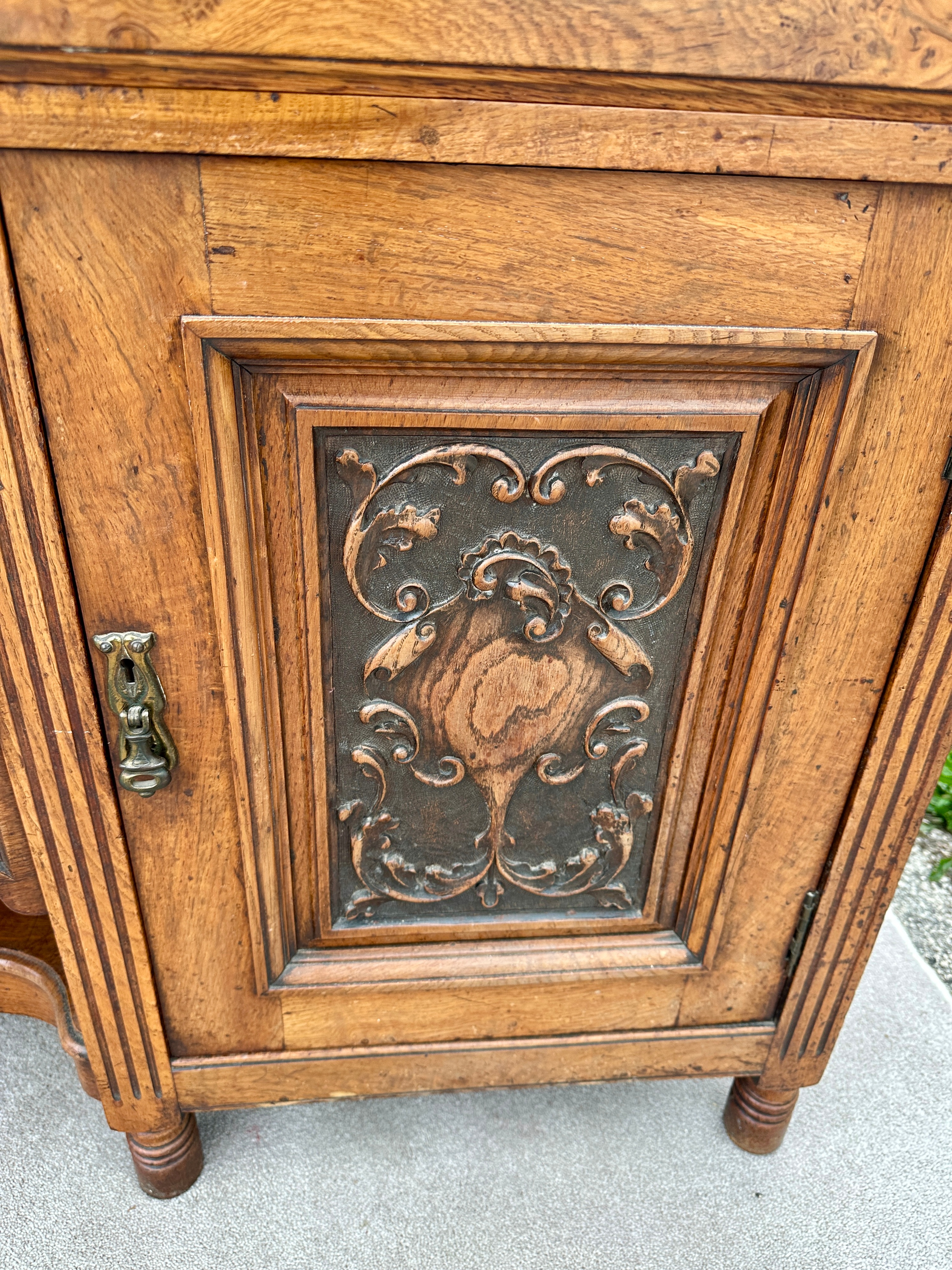
A late Victorian breakfront oak sideboard, featuring a stepped gallery back with three decorative panels. The outer panels contain relief-carved floral cartouches, flanked by gadrooned spindles and turned supports. The main breakfront top surface is constructed from quartersawn oak with a curved central section. The base is configured with two central cupboard doors above a single curved drawer, situated over an open pot board with carved spandrels. This central section is flanked by two pedestals, each containing a single drawer above a panelled cupboard door. The piece is ornamented throughout with relief-carved scrolling foliage and stylised floral cartouches set into recessed panels with darkened, textured backgrounds. Decorative burr oak veneers are applied to the side panels and drawer fronts. The base is supported on short, ring-turned feet. The drawers and doors are fitted with cast metal drop handles and decorative escutcheons. A cast metal handle bears the struck numbers 2 2 0 on the lower portion; characters above these numbers are present but are not legible. No other maker’s marks, signatures, or labels are visible on the item.
Condition report:
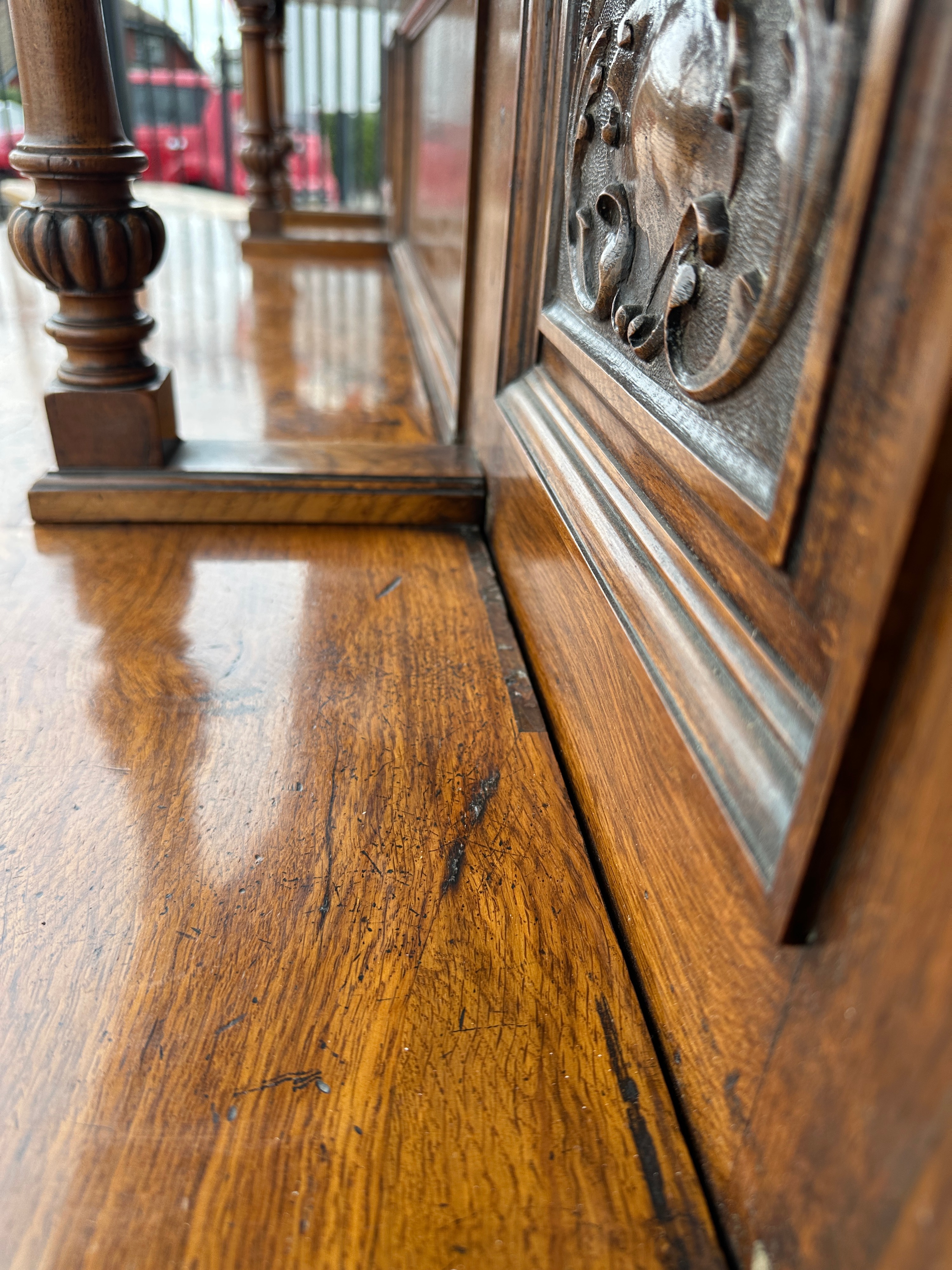
The sideboard shows signs of significant age and use. The main top surface exhibits numerous scratches, scuffs, and indentations across the finish (photo 5). There is a visible gap and horizontal separation along the join line of the top surface boards (photo 2). Darkening and finish wear are present around the metal handles and at the edges of the cupboard doors and drawers (photo 1). Several small, circular holes are visible on the drawer fronts which may indicate historic and inactive woodworm (photo 6). The metal hardware shows a heavy patina and oxidation consistent with age.
Share this lot: