Traditional & Online Auction, Gold, Silver, Antiques & Collectables (14% Buyers Commission)
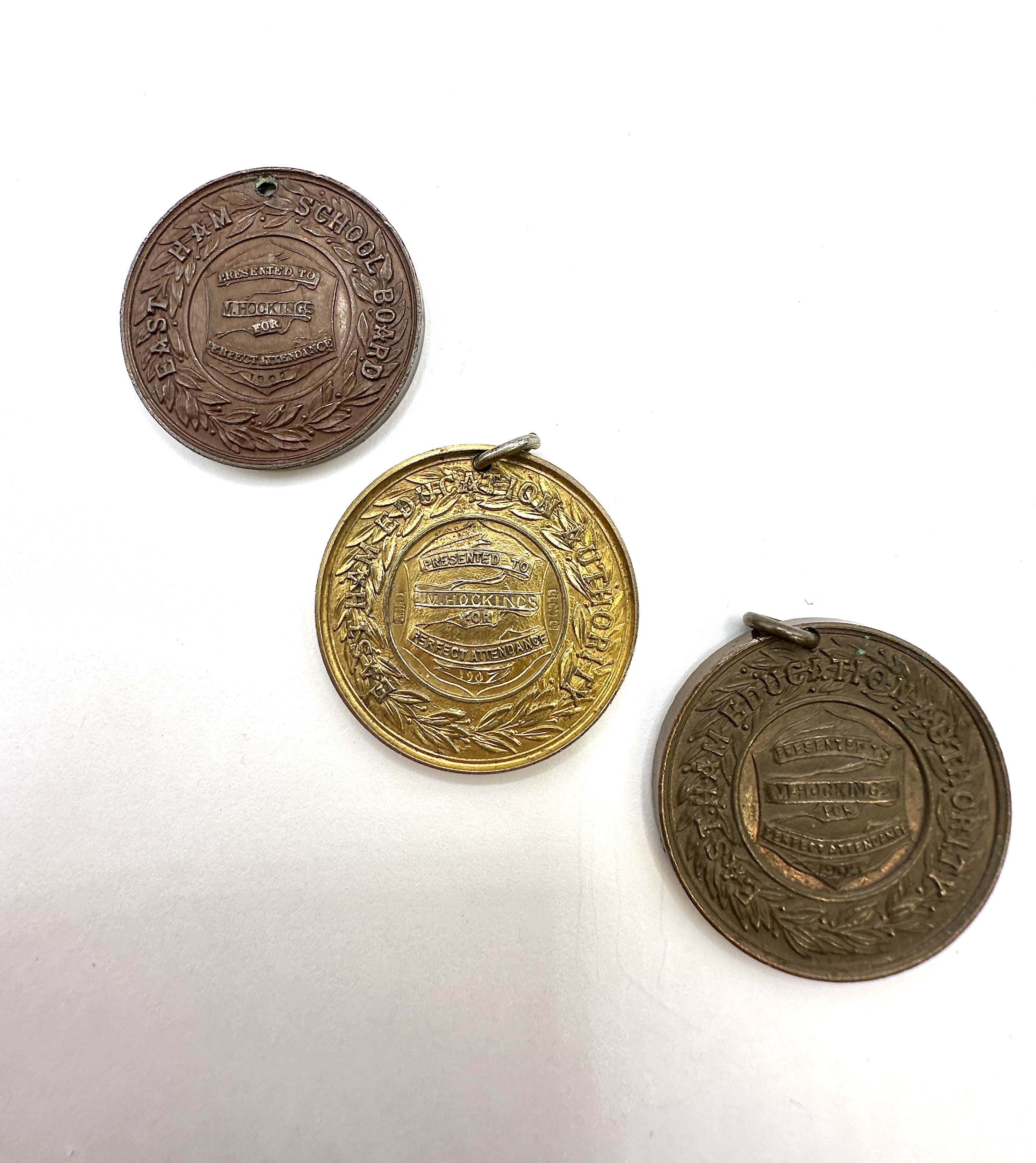
A trio of early 20th-century educational commemorative medals from the East Ham district of London, all awarded to the same recipient, V. Hockings, for perfect school attendance. The lot comprises one silver-gilt medal and two bronze-coloured copper-alloy medals, representing the transition from the East Ham School Board to the East Ham Education Authority following the Education Act of 1902.
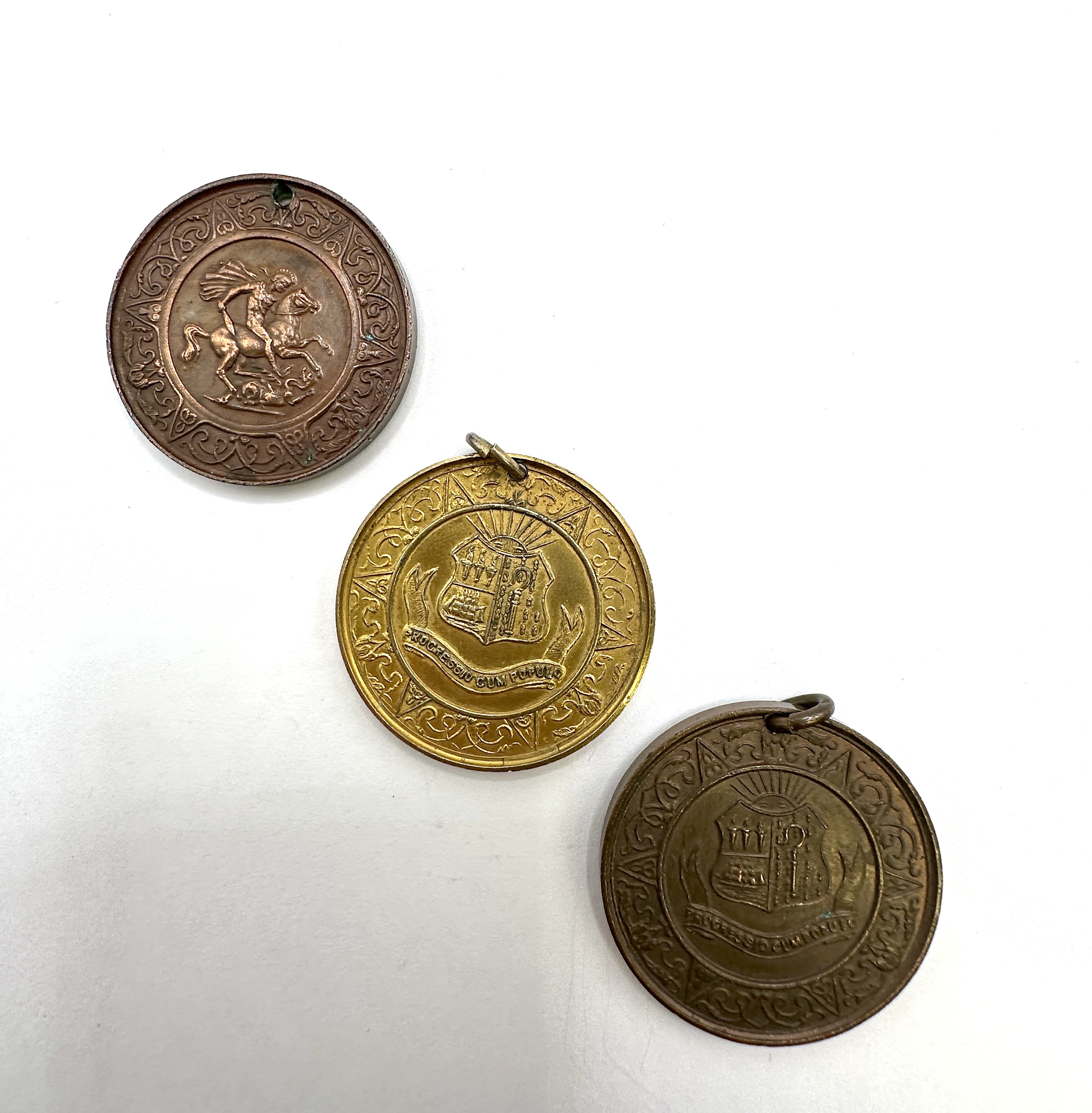
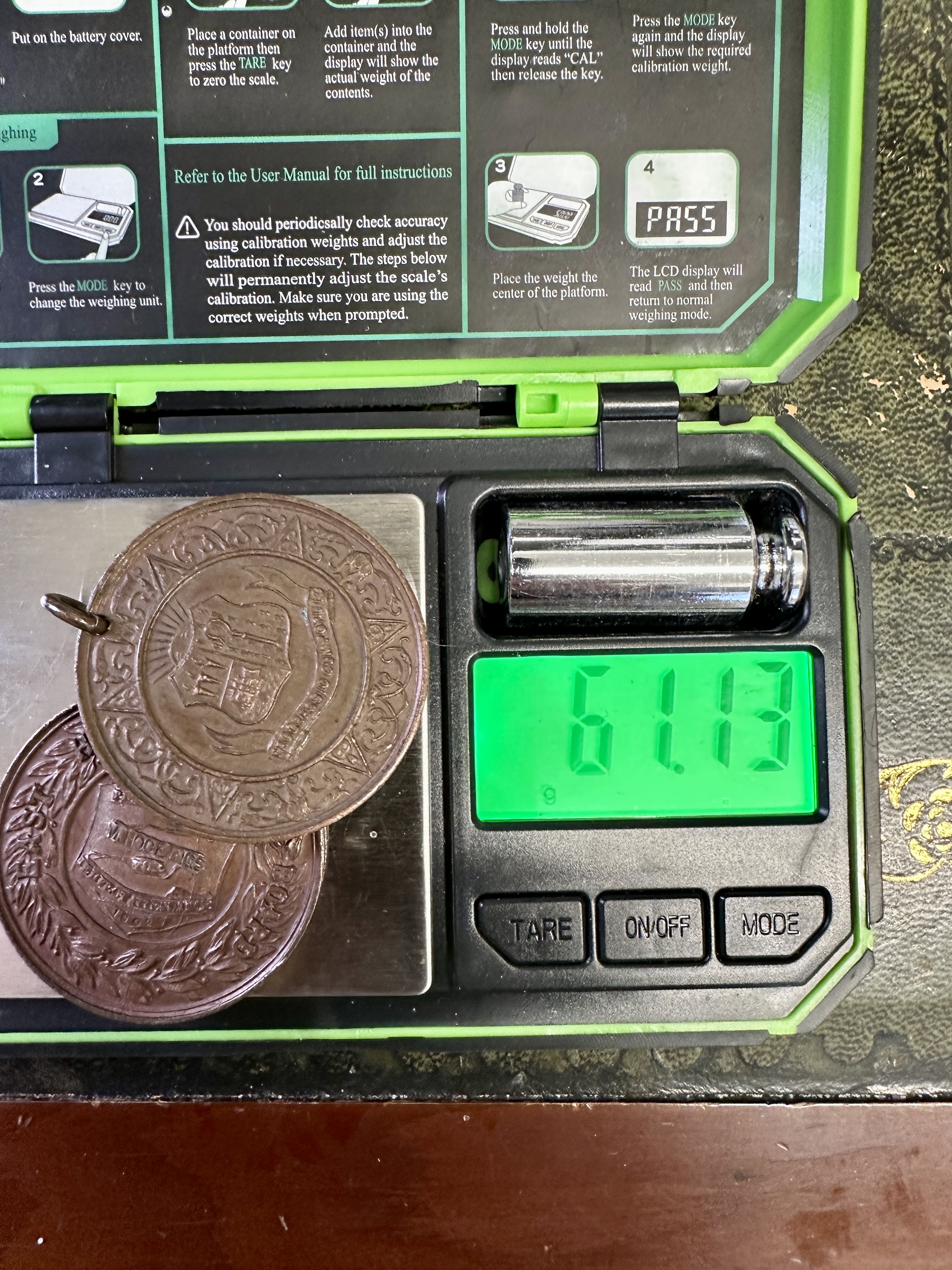
Medal 1 (1902): Struck in bronze-coloured copper alloy. The obverse is inscribed EAST HAM SCHOOL BOARD around a central shield. The shield is engraved PRESENTED TO V. HOCKINGS FOR PERFECT ATTENDANCE 1902. The reverse features a high-relief depiction of Saint George and the Dragon within a decorative scrolled border.
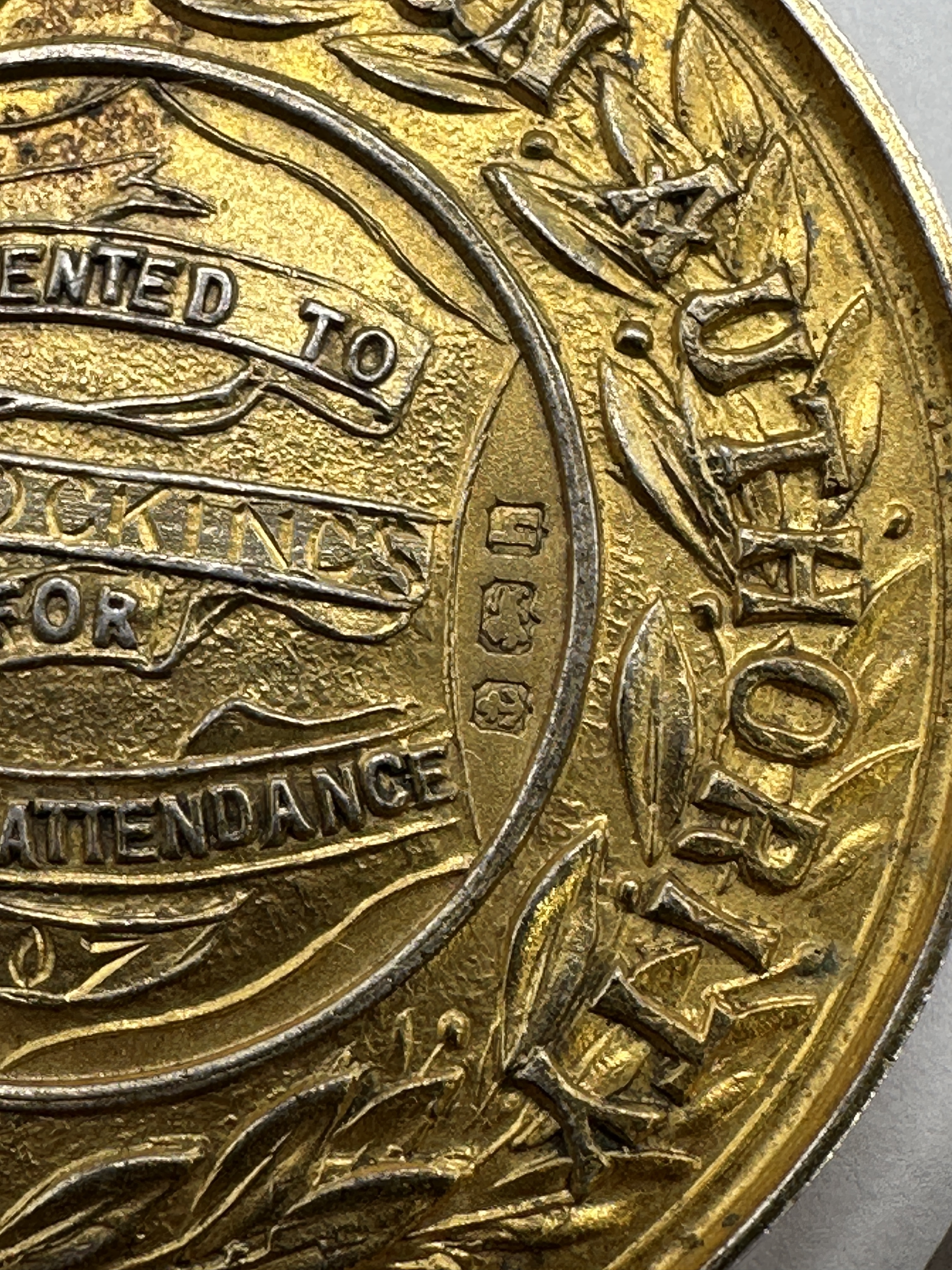
Medal 2 (1907): Struck in silver-gilt. The obverse is inscribed EAST HAM EDUCATION AUTHORITY around a central shield. The shield is engraved PRESENTED TO V. HOCKINGS FOR PERFECT ATTENDANCE 1907. This medal features four vertical hallmarks: the maker mark HB&S for Henry Bourne & Sons Ltd, the lion passant indicating sterling silver, the leopard’s head for the London Assay Office, and the lowercase date letter m for 1907. The reverse displays the East Ham coat of arms and the motto PROGRESSIO CUM POPULO.
Medal 3 (Circa 1904): Struck in bronze-coloured copper alloy. The obverse is inscribed EAST HAM EDUCATION AUTHORITY around a central shield. The shield is engraved PRESENTED TO V. HOCKINGS FOR PERFECT ATTENDANCE. The date at the base is worn but corresponds with the early Edwardian period. The reverse features the East Ham coat of arms and the motto PROGRESSIO CUM POPULO.
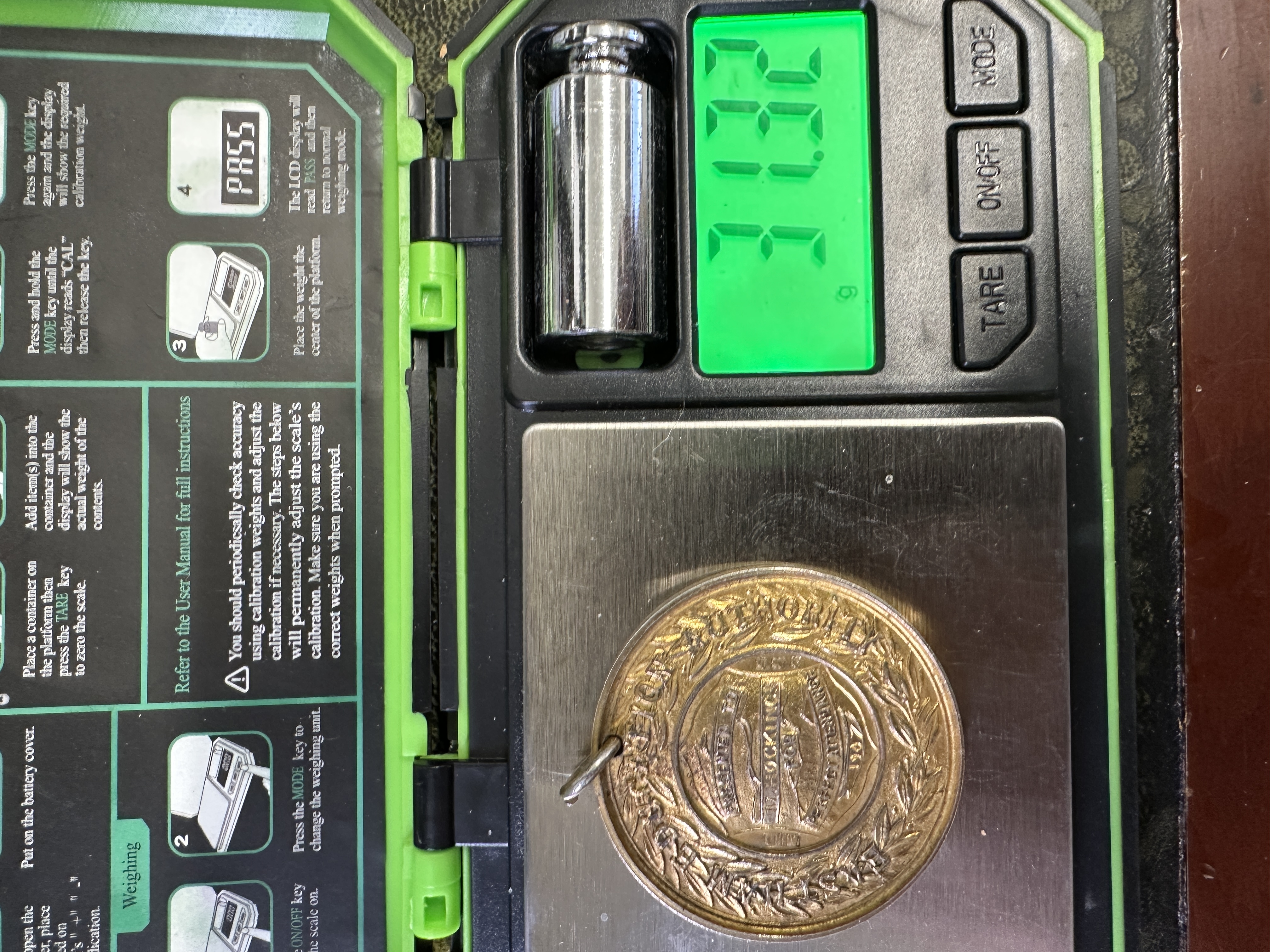
Weight (Silver-gilt medal): 31.32g
Weight (Combined bronze medals): 61.13g.
Condition report:
The 1907 silver-gilt medal is in excellent condition with bright gilding and sharp details; it retains its original suspension ring. The 1902 medal has its original suspension loop removed and has been drilled at the top for suspension; the metal shows a typical aged bronze patina. The circa 1904 medal exhibits a dark, aged patina with significant wear to the obverse inscriptions and date, although the central engraving remains legible; it retains its original suspension ring.
Share this lot: